Where steep pine ridges meet the Sea of Marmara, Sait Faik's storytelling spirit endures in whitewashed Victorian alleys, and the western promontory of Kalpazankaya serves sunset dinners above clear swimming coves.
By Staff Field Dispatch•Field Updated: March 2026•10 min read•✓ 100% Fact-Checked Against UKOME & Municipal Gazettes
While public ferries run on municipal schedules, booking a verified round-trip ticket or small-boat excursion eliminates long terminal ticket queues, provides guaranteed boarding during peak hours, and offers flexible return options. We audited the top four options available for 2026:
01Best Value DIY
Round-Trip Ferry Ticket to Burgazada with Audio Guide
Fast round-trip ferry passage departing from Kabataş, Eminönü, or Kadıköy with downloadable smartphone audio commentary exploring Sait Faik's walking routes.
Direct fast ferry crossing from central European or Asian docks
Digital island audio guide app with offline map & GPS triggers
Flexible evening return departures on any scheduled return vessel
Bypass long ticket booth queues at crowded mainland piers
Burgazada & Princes' Island Tour with Electric Shuttle & Lunch
Provider: Viator • Rating: ★ 4.75 (480+ reviews)
Ideal for travelers seeking scenic ridge panoramas without climbing steep hills. Includes round-trip boat cruise, electric shuttle excursion, and sit-down lunch.
Catamaran boat transfers across the Marmara archipelago
Reserved electric vehicle shuttle tour across coastal ridge roads
Sit-down seaside lunch featuring meze and fresh seasonal fish
Positioned squarely between Kınalıada to the north and Heybeliada to the south, Burgazada occupies a modest 1.50 square kilometers of undulating terrain, dominated by a single pine-cloaked ridge known as Bayraktepe (Hristos Hill) reaching an elevation of 170 meters. Named Antigoni (Αντιγόνη) in antiquity after Antigonus I Monophthalmus, one of Alexander the Great's generals whose son Demetrius I Poliorcetes built a fortress atop the hill, the island has historically been the most intimate and artistically fertile enclave of the Princes' archipelago.
Unlike Büyükada—which swells with thousands of package tour day-trippers every summer weekend—Burgazada remains a close-knit, self-contained village of approximately 1,455 year-round residents. There are no expansive hotel strips, no neon storefronts, and no chaotic souvenir corridors. Instead, the village fan radiates gently upward from the historical ferry slipway: whitewashed turn-of-the-century Ottoman-Greek timber villas, fragrant wisteria-draped courtyards, sleepy cats napping on sun-baked stone ledges, and quiet waterfront meyhanes serving cold raki and grilled mackerel to lifelong islanders.
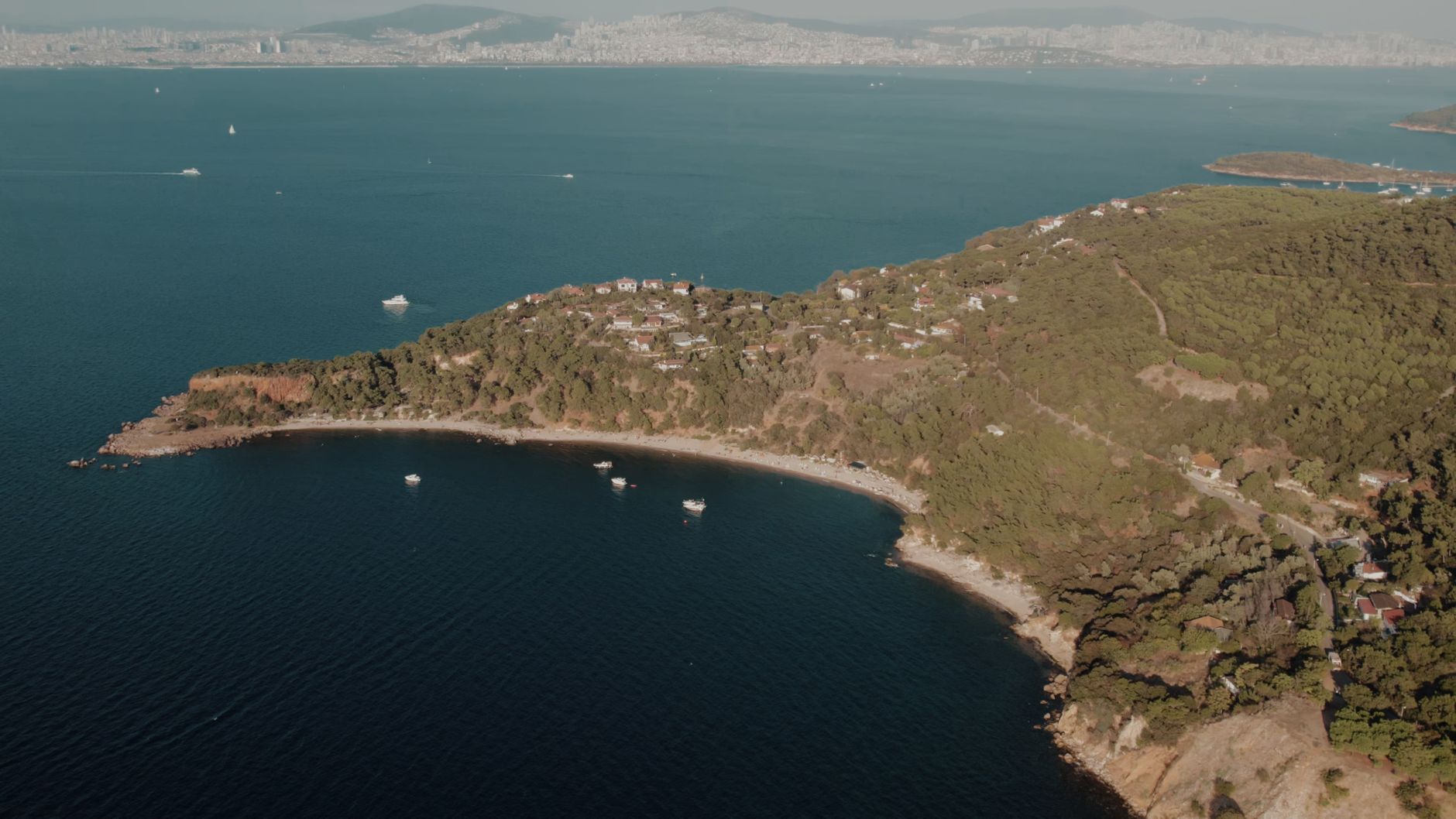
Tranquil pine groves and residential villas slope down toward the Sea of Marmara on Burgazada.
The southern and western flanks of the island drop sheer into deep turquoise water. Here, the landscape belongs entirely to maritime pine, red sandstone outcrops, wild thyme, and steep sea cliffs. Because private combustion vehicles are strictly prohibited, the acoustic environment is extraordinary: the gentle lapping of Marmara swells against pebbled coves, the hum of cicadas in the high summer canopy, and the distinctive rhythmic chime of bicycle bells echoing down narrow pedestrian cobblestones.
HERITAGE MONOGRAPH
Byzantine Exile, Monastic Fortresses & Sait Faik's Literary World
During the Byzantine Middle Ages, Burgazada was renowned for its high-security monastic compounds, which served as self-sustaining theological estates and involuntary places of imperial political internment. The most storied of these is the Aya Yani Church (Ayios Ioannis Prodromos), originally consecrated in 842 AD by the Byzantine Empress Theodora. Beneath the nave of the church lies an austere subterranean stone crypt—the very cell where Saint Methodios I, Patriarch of Constantinople, was incarcerated for seven years during the bitter Iconoclastic persecutions before being liberated and elevated to the Patriarchal throne. The existing tripartite basilica, crowned by a prominent dome and stone bell tower, was reconstructed in 1899 by architect Nikolaos Dimadis following severe damage from the 1894 Istanbul earthquake.
Higher up, crowned at the 170-meter summit of Bayraktepe, stands the Hristos Monastery (Metamorphosis). Established in the 9th century by Byzantine Emperor Basil I the Macedonian atop the ruins of a classical pagan temple dedicated to Zeus, this monastic retreat commanded unbroken 360-degree vistas across the Marmara basin, monitoring all naval approaches to Constantinople.
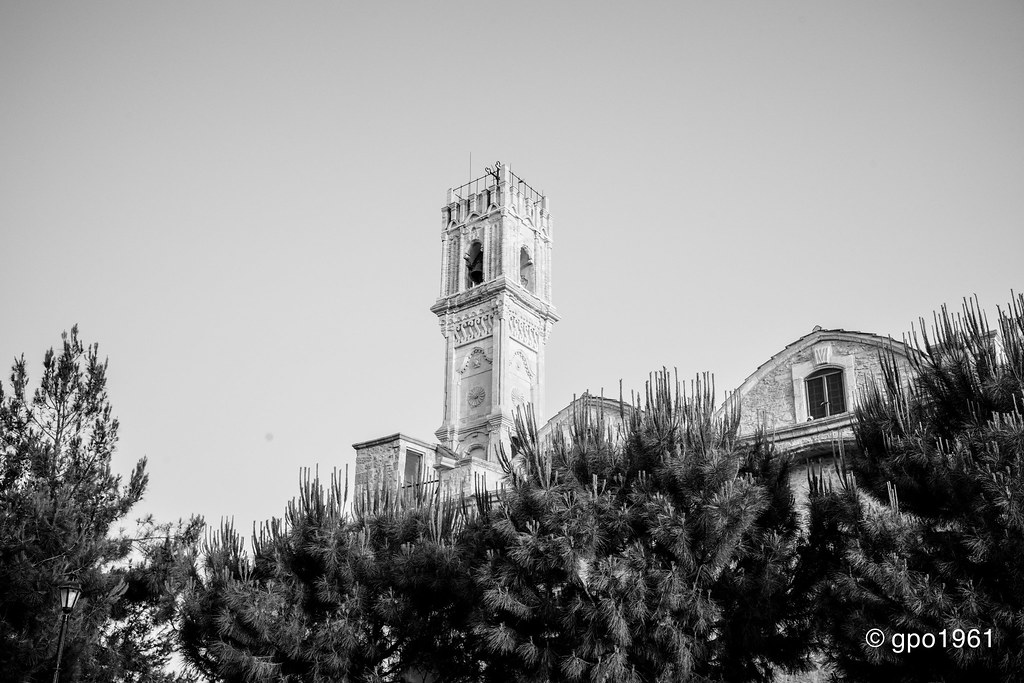
The elegant stone bell tower of Aya Yani Greek Orthodox Church (rebuilt 1899), housing the 9th-century crypt of Patriarch Methodios I.
Sait Faik Abasıyanık: The Writer Who Immortalized the Island
Modern Burgazada cannot be understood without Sait Faik Abasıyanık (1906–1954), the towering pioneer of modern Turkish short fiction. Seeking respite from chronic illness and the frantic commercial pulse of mainland Istanbul, Sait Faik moved permanently into his family's grand Victorian timber manor on Çayır Sokak in 1939.
Rather than writing about aristocrats or political elites, Sait Faik immersed himself in the daily struggles, quiet dignities, and bittersweet joys of the island's Greek, Armenian, and Turkish fishermen, tavern keepers, boat caulkers, and sea divers. In seminal masterpieces such as Alemdağ'da Var Bir Yılan and Kayıp Aranıyor, Burgazada is not merely a setting, but a living, breathing protagonist—a world of sea urchins, salty wind, pine needles, and sudden squalls. His famous literary maxim, inscribed today upon his memorial bust, captures the humanism of the island: "Sevmekle başlar her şey burada" ("Everything begins with loving here").
SIDE-BY-SIDE EVALUATION
2026 Burgazada Tour & Ferry Comparison Matrix
Examine the technical parameters, cancellation policies, inclusions, and exact costs of each transport and tour option to choose the ideal itinerary for your schedule:
Tour / Ferry
Provider
Duration
Dual Price
Key Inclusions
Ideal For
Booking
Round-Trip Fast Ferry + Audio Guide
GetYourGuide
Flexible Day
€14.50 ($15.80)
Round-trip fast ferry ticket, digital audio tour app, skip ticket queues
The Sait Faik Abasıyanık Museum: Inside the Author's Villa
Situated an easy 5-minute uphill walk from the pier at Çayır Sokak No: 15, the Sait Faik Abasıyanık Museum occupies the handsome three-story Victorian timber residence where the author lived and wrote until his death in 1954. Per his final testament, the property was entrusted to the philanthropic Darüşşafaka Society and formally inaugurated as a public memorial museum in 1959. Following an exacting structural restoration completed in 2013, the house now stands as one of Turkey's most intimately curated literary pilgrimage sites.
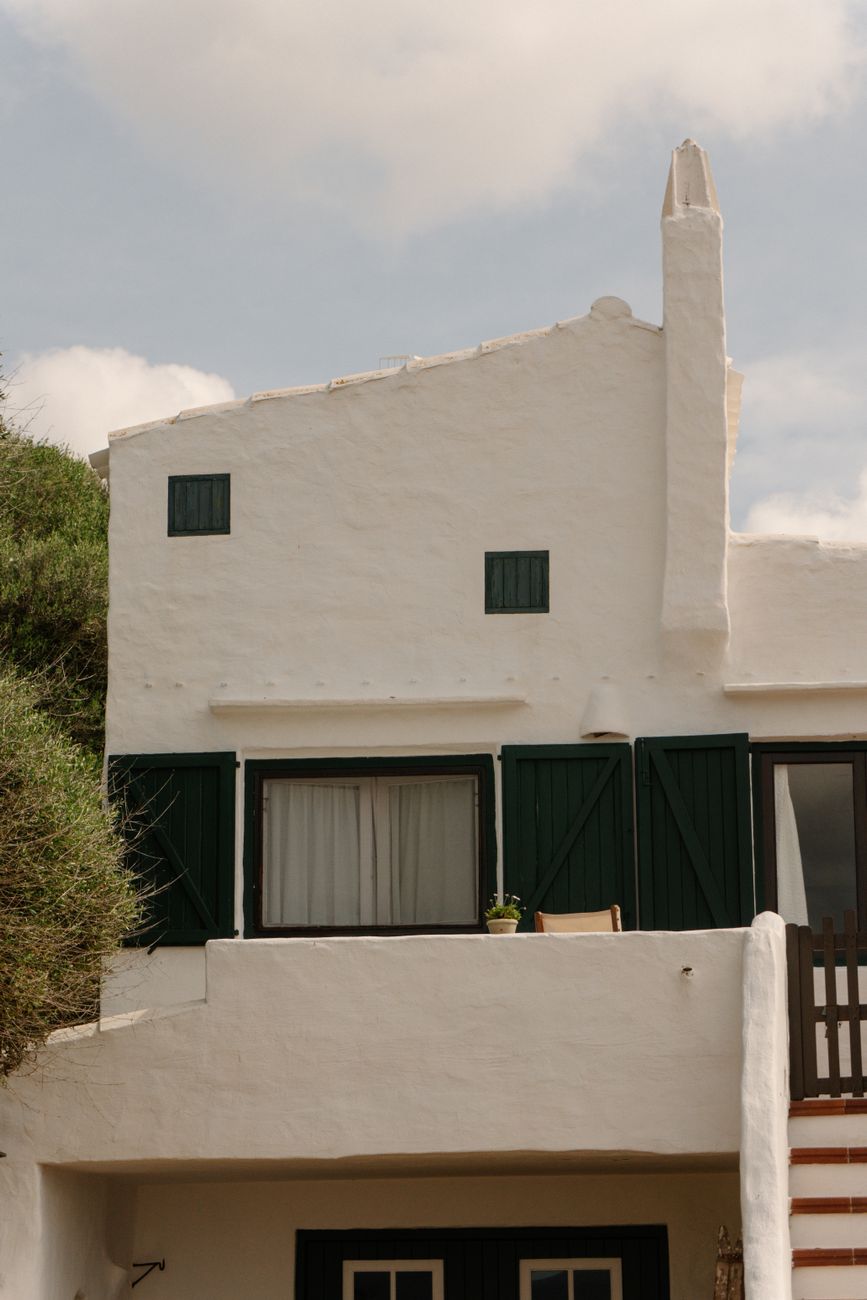
The restored 19th-century white timber residence of writer Sait Faik Abasıyanık on Çayır Sokak.
Admission to the museum is 100% free of charge year-round. Visitors ascend the polished wooden floorboards through preserved rooms containing the author's original walnut writing desk, his reading glasses, handwritten manuscript drafts, original correspondence with contemporary literary figures, personal library, and even his beloved fishing rod and tackle box.
Visiting Protocol & Hours:
Opening Days: Wednesday through Sunday (strictly closed Mondays & Tuesdays)
Kalpazankaya Promontory, Madam Martha Bay & Dining
At the southwestern tip of Burgazada, approximately 2.6 kilometers from the village center at Kalpazankaya Yolu Sokak No: 42, rises the celebrated sea promontory of Kalpazankaya ("Counterfeiter's Rock"). In the 19th century, this rugged cliff face concealed hidden sea caverns utilized by illegal counterfeiters striking false Ottoman coins. Today, it hosts the island's most legendary open-air sunset venue, Kalpazankaya Restaurant (official portal: kalpazankaya.com.tr), which has served diners under canopy pine trees since 1953.
The culinary trademark of Kalpazankaya is its kuzu tandır—slow-cooked milk lamb roasted for hours inside traditional clay-lined pit ovens, yielding meltingly tender meat paired with fragrant rice and wild thyme. Below the dining terrace, a steep stone staircase switchbacks down the cliff to a secluded rocky cove where crystal-clear currents offer refreshing swimming with panoramic sunset views extending west across Sivriada.
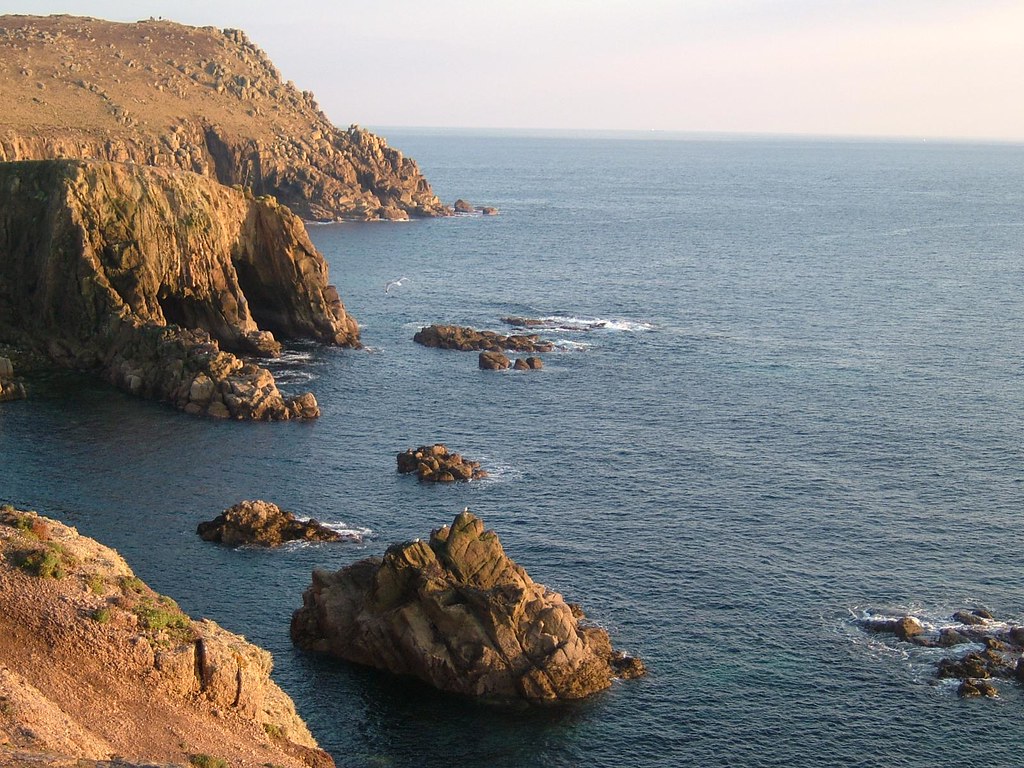
The cliffside dining terrace of Kalpazankaya looking west toward Sivriada and the open Marmara sunset.
Madam Martha Koyu: The Free-Spirited Pebble Cove
Located along the sheltered western shoreline, Madam Martha Koyu is a natural crescent of smooth grey pebbles named after Martha Kazar (1920–1986), an Egyptian-Armenian ballerina who lived in a whitewashed seaside cottage above the cove. Beloved by local fishermen and bohemian artists for her warmth, Martha would leave fresh bread, figs, and spring water on her garden wall for weary walkers.
Today, the cove is an environmentally protected public beach. Access to the shoreline is entirely free under Turkish coastal law. The seabed is rocky and exceptionally clean, making it a favorite retreat for snorkelers. However, colonies of black sea urchins (Paracentrotus lividus) thrive among the submerged limestone shelves; visitors should always bring rubber water shoes (deniz ayakkabısı).
Ergün Pastanesi & Village Gastronomy
Right across from the ferry terminal on the village square stands Ergün Pastanesi, an island culinary fixture founded in 1982. Famous throughout Istanbul for its freshly baked çilekli milföy (strawberry mille-feuille prepared fresh every two hours with rich vanilla cream and crisp flaky puff pastry), it is the customary first stop after disembarking the ferry. For dinner, traditional waterfront tavernas such as Barba Yani and Antigoni Restaurant serve seasonal lakerda (cured Atlantic bonito), grilled octopus, and fresh Aegean sea bass directly beside the bobbing wooden fishing boats.
The bustling outdoor cafe terrace of historic Ergün Pastanesi on Burgazada's central harbour square.
OBJECTIVE CRITIQUE & EDITORIAL INDEPENDENCE
Red Flags & What to Avoid on Burgazada
Proving editorial independence means warning you about genuine operational traps, safety hazards, and timing missteps before you arrive:
✕Do Not Visit on Mondays or Tuesdays if Your Priority is the Sait Faik Museum: The memorial villa is operated by the Darüşşafaka Society and is strictly closed to the public every Monday and Tuesday. If you travel specifically for literature, plan your excursion between Wednesday and Sunday.
✕Do Not Wade Barefoot at Madam Martha Koyu: The seabed contains extensive natural colonies of black sea urchins (Paracentrotus lividus). Stepping on an urchin spine causes intense pain and requires medical extraction. Always wear sturdy rubber water shoes before entering the water.
✕Do Not Arrive at Kalpazankaya for Sunset Without a Table Reservation: From June through September, every cliffside table with a direct view of the setting sun over Sivriada is fully booked by 17:00. If you walk 35 minutes out to the point without a confirmed booking, you will be relegated to rear gravel benches or turned away entirely.
✕Avoid the 17:00 to 19:30 Weekend Return Ferry Crush: On sunny summer Saturdays and Sundays, hundreds of day-trippers surge toward the single ferry pier simultaneously, resulting in packed waiting halls and standing-room-only passage. Plan to board before 16:30 or stay for a relaxed seaside dinner and catch the uncrowded 20:45 or 21:30 return vessel.
✕Never Hike Unlit Bayraktepe Forest Trails After Dark: The interior pine trails climbing Hristos Hill have zero street lighting. Walking these paths after twilight risks ankle injuries on exposed tree roots and sudden encounters with territorial free-roaming dogs in the deep woods. Stick to paved residential lanes after sunset.
✕Camping and Open Campfires Are Strictly Prohibited: Despite historical romantic folklore surrounding Martha Bay, pitching tents, sleeping overnight on the beaches, and lighting campfires are strictly banned by municipal and forestry laws, backed by regular coast guard and gendarmerie patrols with heavy fines.
DECISION ARCHITECTURE — DIRECT TRAVEL CHOICES
Frequently Asked Questions: Direct Choice Answers
Get immediate, definitive verdicts on common travel dilemmas regarding transportation, beaches, dining, and island comparisons:
Definitive Verdict: Choose Burgazada if you value peace, literary intimacy, secluded swimming coves, and genuine bohemian village charm; choose Büyükada if you want grand historic hotel architecture, bustling seaside shopping boulevards, and extensive carriage-route tours. While Büyükada accommodates heavy commercial tourism, Burgazada (1.50 km²) maintains an authentic residential tranquility where you can comfortably walk across the entire island in 40 minutes without encountering crowds.
Definitive Verdict: Heybeliada (2.34 km²) is larger, greener, and dominated by major historic institutions like the Halki Theological Seminary and the Naval Academy, featuring expansive pine nature parks like Değirmenburnu. Burgazada (1.50 km²) is steeper, rockier, and distinctly artistic, celebrated for Sait Faik's preserved Victorian home, clifftop sunset dining at Kalpazankaya, and quiet pebble coves.
Definitive Verdict: Ferries depart from Kabataş and Eminönü on the European side (taking 65–85 minutes across multiple island stops) and from Kadıköy and Bostancı on the Asian side. Bostancı offers the quickest crossing (30–35 minutes). The standard public transit fare on an Istanbulkart is ₺140–155 for non-residents. Private fast ferry tickets with digital audio guides can also be reserved in advance for €14.50 (~$15.80 USD).
Definitive Verdict: Take the municipal electric Adabüs minibus (Route BU-1) from the central clock tower to Kalpazankaya for ₺144 per person (paid via Istanbulkart or credit card, ~10 minutes), or take the leisurely 2.6-kilometer seaside stroll along Gezinti Caddesi (30–35 minutes of level walking past scenic coastal coves and pine groves).
Definitive Verdict: Yes. Under Turkish coastal legislation, access to the natural pebble shoreline at Madam Martha Koyu is completely free for everyone. While a seasonal kiosk rents sun loungers and umbrellas for ₺350–500, renting equipment is entirely optional; you are free to place your towel on the pebble beach at no cost.
Definitive Verdict: You must order the signature çilekli milföy (fresh strawberry mille-feuille). Ergün Pastanesi has operated on the ferry plaza since 1982 and bakes fresh batches of this layered puff pastry with light cream and fresh fruit every two hours. Pair it with traditional Turkish tea or freshly brewed Turkish coffee.
Definitive Verdict: Yes, bicycle rental shops near the pier offer pedal bikes for ₺150–250 per hour. However, be aware that while the coastal route to Kalpazankaya is relatively flat and easy, roads ascending toward Bayraktepe and the Hristos Monastery have steep 15–20% inclines that require walking the bike unless you are in excellent cardiovascular shape.